The UK Beginner Skateboard Hub

Bob Gnarly / The UK Beginner Skateboard Hub
First board.
Whole new world.
From choosing your first setup to finding your feet at the skatepark. Honest advice, practical guides and a place to start your skateboarding story.
20 beginner guides / Your original favourites
New to all this? You’re in the right place.
Less guesswork.
More good sessions.
You don’t need to know every trick or have the right label on your hoodie. Start with a board that suits you, learn to control it, and find a welcoming place to practise. Here are your first three stops.
01 / Choose your board
Choosing Your First Skateboard
Your first board should suit the skating you actually want to do. Start with the ground under your wheels, then work back to the setup.
Read the guide →02 / Choose your board
What Size Skateboard Do I Need?
Deck width is the headline measurement, but length, wheelbase and the rider’s comfort all deserve a look. There is no single perfect size for every beginner.
Read the guide →10 / Learn to ride
Your First Skateboard Session
Your first session is about getting comfortable on four wheels. Keep the terrain flat, the goals small and the speed easy to manage.
Read the guide →The beginner route
Start small.
Build your confidence.
No pressure to drop in on day one. Find your setup, build the basics and enjoy the next step when you’re ready.
Find your learning route →Chapter 01 / Beginner skateboarding
Choose your board
Sizes, setups and the differences that matter before you buy.
01 / Choose your board
Choosing Your First Skateboard
Your first board should suit the skating you actually want to do. Start with the ground under your wheels, then work back to the setup.
Read the guide →02 / Choose your board
What Size Skateboard Do I Need?
Deck width is the headline measurement, but length, wheelbase and the rider’s comfort all deserve a look. There is no single perfect size for every beginner.
Read the guide →03 / Choose your board
Complete vs Custom Skateboards
A complete gets you rolling with fewer decisions. A custom setup lets you choose every part. The right route depends on what you already know about your ride.
Read the guide →04 / Choose your board
Buying a Child’s First Skateboard
A child needs a board they can control now. Look beyond the graphic and age label to the rider, the setup and the space where they will learn.
Read the guide →05 / Choose your board
Skateboard Parts Explained
Deck, trucks, wheels and bearings: the parts are simple once you know what each one does. Here is the useful version, without a wall of jargon.
Read the guide →06 / Choose your board
Skateboard Wheels: Size & Hardness
The same board can feel very different with another set of wheels. Match your wheels to the surface and the skating you want to do.
Read the guide →07 / Choose your board
Skateboard, Cruiser, Longboard or Surfskate?
They all have four wheels, but they are built around different ways of riding. Pick the experience you want before picking a graphic.
Read the guide →08 / Choose your board
Deck Shapes & Concave
Popsicle or shaped? Mellow or deep? Get a feel for the outline, concave and wheelbase before picking your next deck.
Read the guide →09 / Choose your board
Choosing Trucks for Your Deck
Make sense of axle widths, truck heights and single-versus-pair listings. Get the fit sorted before building your setup.
Read the guide →Chapter 02 / Beginner skateboarding
Learn to ride
Build control and confidence at your own pace, with protection and coaching in the mix.
08 / Learn to ride
Learning to Skateboard as an Adult
You do not need a teenage backstory to start skating. Give yourself a sensible setup, a manageable practice space and permission to take it slowly.
Read the guide →09 / Learn to ride
Helmets & Pads for Beginner Skaters
Protection should fit well enough that you will actually wear it. Choose the right equipment for skateboarding and take a moment to set it up properly.
Read the guide →10 / Learn to ride
Your First Skateboard Session
Your first session is about getting comfortable on four wheels. Keep the terrain flat, the goals small and the speed easy to manage.
Read the guide →11 / Learn to ride
Pushing, Turning & Stopping
Being able to stop is as important as getting moving. Build these three foundations on dry, level ground before adding speed or ramps.
Read the guide →12 / Learn to ride
First Skills Before Your First Ollie
There is plenty to learn before jumping. Better rolling control makes the next stage more enjoyable and gives every trick a stronger foundation.
Read the guide →17 / Learn to ride
Skate Lessons & Building Confidence
A good lesson gives you a manageable next step. It can help you learn the basics, understand your setup and feel more comfortable sharing a skate space.
Read the guide →Board control / Rhythm / Your first pop
3 basic tricks to learn.
Got pushing and stopping sorted? Get into kick turns, tic-tacs and ollies with rough pen-and-ink foot maps, step-by-step tips and a bit of skate history. One guide, three places to start.

01 / Control
Kick turn
Lift, pivot and pick your new direction. Start with small, controlled turns.
Learn the kick turn →
02 / Rhythm
Tic-tac
Link little turns, find a rhythm and get the board travelling.
Learn the tic-tac →
03 / Pop
Ollie
Jump, pop and bring the board with you. Learn the timing before chasing height.
Learn the ollie →Chapter 03 / Beginner skateboarding
Find your space
Flat-ground practice, street spots and your first indoor or outdoor park session.
13 / Find your space
Your First Skatepark Visit
You do not need to be brilliant to belong at a skatepark. You do need to understand how the space flows and choose a part of it that suits your control.
Read the guide →14 / Find your space
Where to Skate as a Beginner
The best first spot is often the simplest: dry, smooth, level and spacious. Find somewhere you can practise control without negotiating traffic or surprising other people.
Read the guide →15 / Find your space
Indoor Skateparks for Beginners
An indoor park can be a brilliant way to meet skaters, get coaching and keep practising through bad weather. Pick a session that fits your experience.
Read the guide →16 / Find your space
Street Skateboarding for Beginners
Street skating is a style as well as a setting. It can begin with flat-ground skills, long before ledges, rails or stairs enter the picture.
Read the guide →Chapter 04 / Beginner skateboarding
Live the skate life
Understand the names, look after your board and find clothes you actually want to skate in.
18 / Live the skate life
Skateboard Brands: Where to Start
A familiar name can help you find a starting point, but choose the individual board. Brands often make different ranges for different riders and budgets.
Read the guide →19 / Live the skate life
Skateboard Maintenance & Setup Checks
A quick check before riding can catch small problems early. Keep the board dry, listen for changes and fix the cause rather than tightening every nut as hard as possible.
Read the guide →20 / Live the skate life
Skate Clothing, Shoes & Finding Your Style
Wear something you can move in, with shoes that feel secure on the board. Skate style grows around the sessions you enjoy; there is no uniform to earn.
Read the guide →Get set for your first session
Your board.
Your setup.
Explore beginner completes, choose protective gear, or use our skate bundle builder to put your kit together. Read the live product and offer details before choosing.
Keep the good stuff
The original
reading list.
Our existing beginner articles are still here. Revisit a favourite or explore the expanded guides above.
Quick answers / Proper starting points
A few things
you might be wondering.
What size board should I start with?
For many teenage and adult trick-board beginners, 8.0–8.25 inches is a useful comparison point. Smaller riders, bigger feet and different riding goals can change that. Compare length and wheelbase too, and try a few sizes if you can.
Am I too old to start?
Plenty of adults take up skating. Keep the goals manageable, choose suitable terrain and consider a beginner lesson. Your pace and control matter more than a deadline.
Do I need a skatepark straight away?
No. A permitted dry, level, smooth practice area is ideal for learning to roll and stop. A coached skatepark beginner session is another useful route.
What should I buy alongside a board?
A properly fitted helmet, suitable pads and secure closed shoes are practical first-session essentials. Check equipment guidance and any rules at your chosen venue.
Can you help me choose?
Absolutely. Contact the shop with your riding goals, rough budget and sizing questions, or visit us in Sunderland to talk through the options.
Skateboard HQ for Sunderland
Real shop.
Proper advice.
Unsure about size, setup or your first board? Tell us where you want to skate and we’ll help you work through the options.
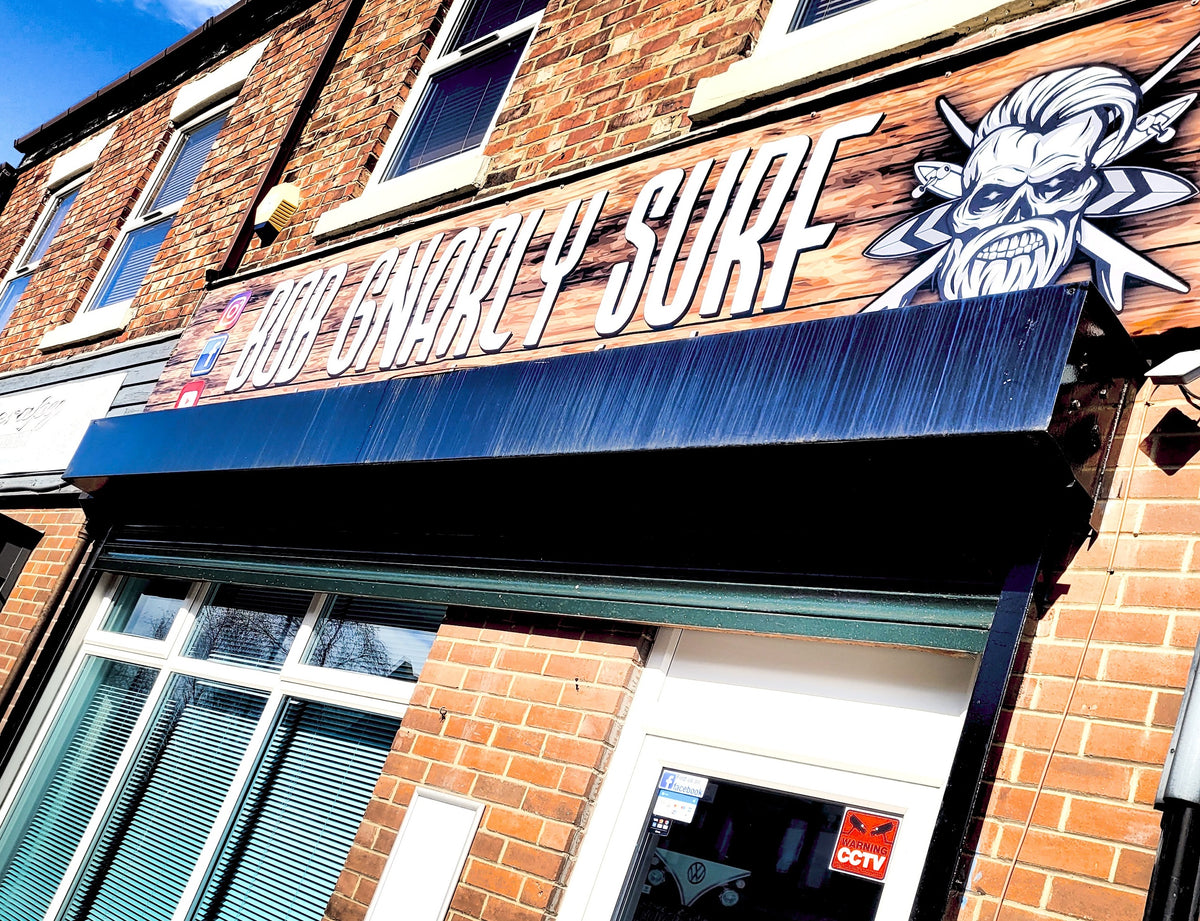
Visit Bob Gnarly Surf & Skate
78 Hylton Road, Sunderland, SR4 7BB